
If you are losing weight on a GLP-1 medication like Ozempic, Wegovy, Mounjaro or Zepbound, some of what you lose is likely to be lean tissue, not only fat. Weight loss of any kind commonly includes some. The aim is to keep that loss modest and keep your strength climbing.
The short version
- Some loss of lean tissue during significant weight loss is normal.
- The practical levers are progressive strength training, enough protein, and tracking your trend over time.
- Research on strength training specifically during GLP-1 use is still developing. The closest evidence, from older adults losing weight through diet, favors adding resistance training.
- Decisions about your medication stay with the doctor who prescribed it.
What you can do about it
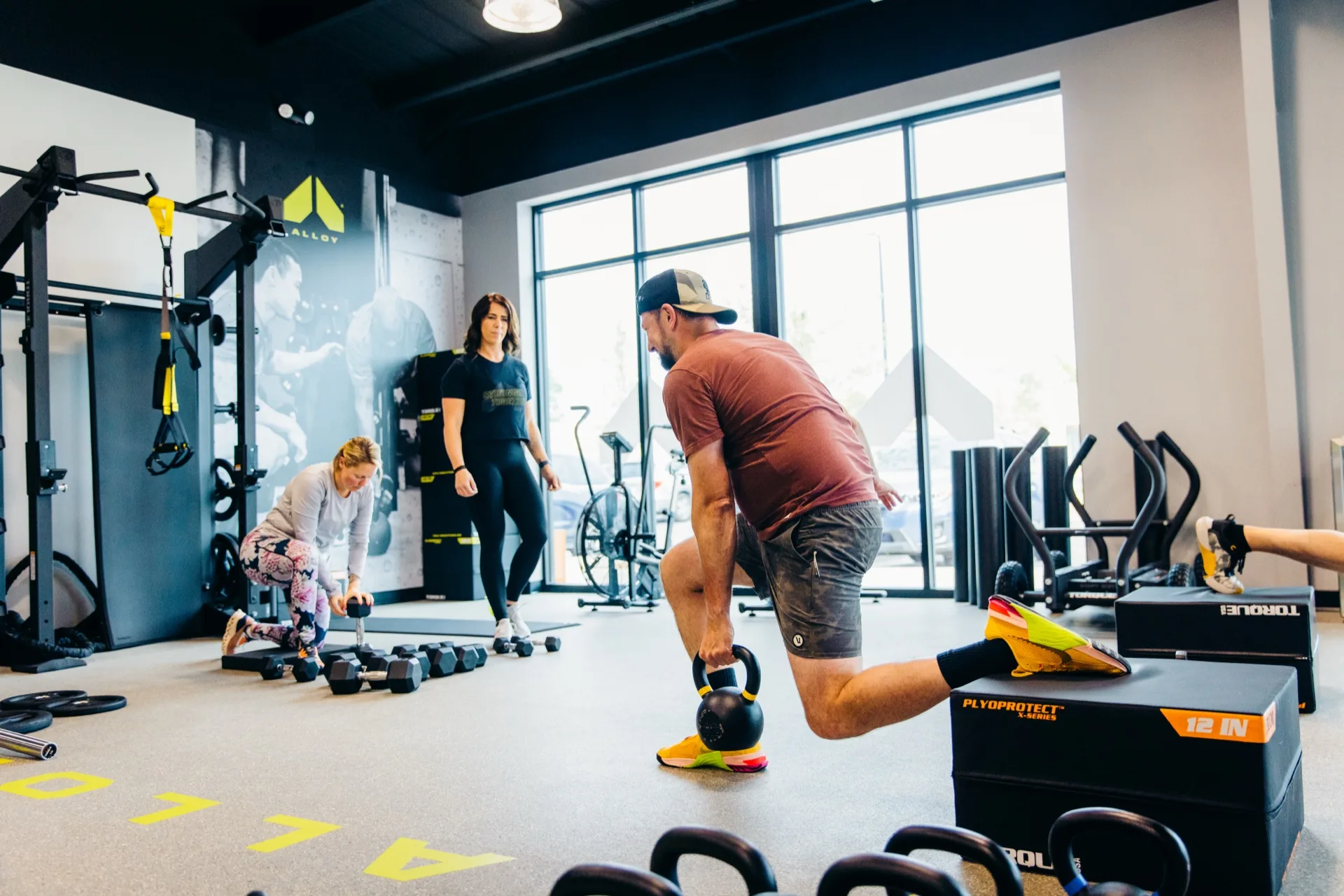
Lift, and keep the load progressing. Two to three coached strength sessions a week, where the weight goes up over time. The progression is the point. That is the format of our small group personal training, with a coach in the room and never more than six people in a session.
Eat enough protein. This gets harder when you are eating less on a GLP-1, and it matters more. Published guidance for older adults gives ranges rather than a single number, and we walk through them in our protein page. Our nutrition coaching helps with habits, not clinical plans. For a personal target, especially while eating less, a registered dietitian is the right call.
Track the trend, not one reading. An InBody scan estimates your body composition. Repeated every 30 days under the same conditions, it can show an estimated trend while you train.
Why this matters more after 40
After 40 you are already losing muscle to age. Muscle mass declines gradually from around age 50, and strength tends to decline faster, particularly after 60. Muscle generates the force to catch yourself when you stumble, carries you up a trail in Forest Park, and contributes to keeping bone dense. Losing lean tissue during a weight-loss phase, on top of age-related loss, is the outcome to work against.
What the research says
How much of the weight lost is lean tissue varies a lot. A 2024 review of GLP-1 based therapies found the lean-mass share of total weight lost ranged from roughly 15 percent or less in some trials to 40 to 60 percent in others, depending on the medication, the study, and how body composition was measured.
Two widely cited trials show what that can look like.
- In the SURMOUNT-1 body-composition substudy of tirzepatide (the drug in Mounjaro and Zepbound), published in 2025, about three quarters of the weight lost was fat mass and about one quarter was lean mass.
- In an exploratory analysis of the STEP 1 trial of semaglutide (the drug in Ozempic and Wegovy), reported as a conference abstract in 2021, total fat mass fell by about 19 percent and lean body mass by about 10 percent. Because fat fell further, people finished with a higher share of lean tissue than they started with.
Lean mass on a scan is not identical to skeletal muscle. It also includes water, organs, and connective tissue, and some reduction is expected any time the body gets smaller. A 2025 MRI substudy of tirzepatide in people with type 2 diabetes found that muscle volume decreased roughly in line with what is expected for the amount of weight lost, while fat stored inside the muscle decreased by more. The authors read that as a possible positive sign for muscle quality.
The strongest related evidence for lifting comes from a diet trial, not a GLP-1 trial. In a 2017 New England Journal of Medicine study, obese adults aged 65 and over lost weight through diet for six months. The group that added resistance training lost about 2 percent of its lean mass, compared with about 5 percent in the aerobic-only group and about 3 percent in the group that did both. Hip bone density dropped by about 3 percent in the aerobic-only group, but by about 1 percent or less in the resistance and combined groups.
That trial did not involve GLP-1 medication, and trials looking specifically at resistance training during GLP-1 use are still developing. So the case for lifting on these medications rests on strong related evidence that has not yet been confirmed directly.
How we coach it at Alloy Progress Ridge
You train in a group of no more than six, with one coach who sets your loads and moves them up as you get stronger. Your plan is built for you. If the medication leaves you low on energy or queasy on a given day, tell your coach and the session gets adjusted.
Your first visit is a Starting Point Session: a conversation and an assessment. We talk through your goals and history, check how you move, and take an InBody baseline. InBody uses bioelectrical impedance, which is affected by hydration and measurement conditions. So we read it as trend data over months, alongside your strength, your measurements, and how you feel.
Some loss of lean tissue is normal, and we cannot promise a specific body-composition result. Our coaches are fitness professionals, not medical providers, and coach-led training complements your medical care rather than replacing it.
We are in Progress Ridge TownSquare in Beaverton, next to New Seasons Market. See how the program works in practice: strength training on a GLP-1 in Beaverton.
Book your intro call and bring your questions.